|
-Stathia Orwig  On June 1st, we turned 8 years old!! And, we just finished our expansion...so, I think that calls for a celebration! Hopefully, by now, you have heard about our Open House on Saturday, August 24th from 1:00-4:00pm To celebrate, we will have student performances, teacher performances, tours, a presentation from Steinway, & a Music Together® sample class.  Soon, the schedule for the day will be publiished, so definitley keep your eye on the Open House page. If you're reading this, make sure you come by between 2:30-3:30pm as a special truck might just be swinging by for some treats!  While you are partying with us, don't forget to put your name in the raffle box. Raffle items will be: MSS gift certificate MSS water bottle MSS bag filled with instruments we use in Music Together class MSS sweatshirt  We hope you bring your family and friends by for what is sure to be a fun afternoon! Thank you for helping make MSS the best music school in Richardson!
0 Comments
-Stathia Orwig A year ago, our five year lease was coming to an end soon and we were running out of room. To think Music SO Simple started with 2 teachers teaching out of our homes and travel teaching to then renting a room at a nearby church to a commercial space with 6 rooms! All in 6 years! And now, 8 years later we needed more space. This is a story about our expansion and the vision I have for Music SO Simple. We did look around at moving for about a year prior. Honestly, my moving radius was SMALL! I love where we are and it feels very central to our families. So, ultimately when I was able to secure the deal to expand into the empty space next to us, it was a done deal. Our current layout was 6 teaching rooms (with one being my office), 2 waiting areas, and our teacher workroom. I, somehow convinced my brother, Dimitrios, to be the lead contractor. Together, we designed a layout that fit in the rooms I needed. He drew up the plans and we were able to get started.  The space on the left is our existing space, adding in the 4 rooms on the right with the hallway. THE CHANGES: We moved our teacher workroom to the back of the studio. The old teacher workroom was renamed "crescendo" and is now our Music Together & Merry Musicians room. The shape of this room is perfect for both of these classes and is allowing us to add more of them since they have their own dedicated space. The mood of the room is also wonderful since it's super preschool friendly with the carpet & art on the walls!  My office is now "our office". This allows me a space to work and Gayle, a space to get quite work in & phone calls!  The keyboards have been moved to the front of the studio into a slightly larger room. We have been able to make room for all 6(!!) digital keyboards AND a table for students to work on written assignments. In addition to Studio Kids ensemble classes, we are adding a new curriculum called Piano Express, which is a wonderful group piano program! We are planning to offer classes throughout the week!  Most full-time teachers now have their own spaces to teach in & each picked a musical name assigned to a room. It was super fun to involve everyone in the naming of the rooms! Ms. Lynne--> Rubato with her own Petrof grand piano Ms. Emily--> Vivace with the Boston grand piano Ms. Jean--> Dolce with the Boston upright piano Ms. Logan--> Rhapsody with the blue Boston upright Ms. Meredith--> Treble with the Steinway grand Mr. Large--> Largo (which is very appropriate, don't you think?) with all of the string instruments The old keyboard room is now for guitar and has been named "Bass". Even the restrooms have a name!! RESTrooms...and they each have their own artt, thanks to one of my talented students, Susu, who brought my vision to life! Look closely for the rests... In the front on the new side, we now have a bigger room, named Glissando, which will be used for teaching, but also recital prep classes, small recitals, meetings, and small yoga classes. My dream was to have a Steinway Spirio in this space. It's a Steinway grand that also plays by itself & records. Imagine being able to have our students listen to amazing artists from all over the world play right in our own school! And, we can make recordings of our students and be able to edit. Thanks to Steinway Hall- Dallas, this dream has come true! More coming on that later!! Lastly, we have some amazing custom touches to our space, thanks to Dimitrios. Not only did he share my vision of MSS and what we bring to the community, he put in his own creative touches which have literally blown me away. In the back waiting area, we have an old grand piano turned into an amazing bookshelf! And in the front waiting area, he made a coffee table. I want to thank a few key people: To my team of teachers: Thank you for covering pianos, dealing with dust, things being out of place, going with the flow, and making things work. Your patience and excitement helped propel me forward into this dream becoming our reality. To Casey: Thank you for all that you and Steinway Hall do...for helping us teach on the best instruments and for making my dream a reality. You seriously are the best. To Gayle: Thank you for being at MSS when I couldn't be, for letting in workers, cleaning up after workers, moving pianos, covering up pianos, moving pianos back, changing the room schedules endlessly, coming up with alternative ideas when I couldn't see clearly, and listening to me. You are irreplaceable. To Dimitrios: Thank you for your honesty, your sarcasm, & your humor. You answered most of my phone calls & texts, and you treated MSS like your own. Thank you for the electricity & plumbing- all of the stuff we needed but can't see. And for all of the things we can see: the finishes, the cameras, tvs, bookshelf, and coffee table. Your work is truly amazing. Love you so much and I owe you more than I could ever pay back. To Brian, my biggest cheerleader: I could have never done this without your help, wisdom, guidance, and patience. Thank you for the late nights and weekends at MSS. You're the best tech support and checkbook ever!! lol And lastly, to our students, parents, families & friends who have all cheered us on, dealt with the mess, shared the excitement, & helped decorate...thank you!! And...join us as we celebrate our 8th birthday and expansion on Saturday, August 24, 2024   Most of you who know me know that organization is my strength. My Full Focus planner is by my side all day, every day. I'm constantly thinking and doing.
We love beginning the new year with new goals and plans! I always talk with my students about the fresh start in September...and then we get to recreate in January!! Each year, I usually do a blog about goals for MSS- where we are, where we want to go. It's helpful for me to make it "public" so that I am (sort of) accountable. So, here it goes! #1: EXPANDING OUR SPACE I've signed a lease to expand our space!! Construction should begin soon. We are adding in one bigger room and 3 smaller classrooms. In addition, we are moving our teacher workroom to the back of the new space and converting the existing teacher workroom into our group keyboard room. All of this is estimated to be finished around March. #2: SUB CLASSES We began our school year with a schedule of amazing Saturday Unique Bonus (SUB) Classes. I want to continue this momentum through the spring and fall. This spring, we have lined up classes in Music Memory, Musical Theatre, Opera, and a special community outreach at a nursing home. #3: EXPANDING OUR RECITAL OPPORTUNITIES As we continue to get larger, I want to be able to offer our students the same "intimate" recital settings. However, we can not do this with our typical 2 recital dates per year. So, in order to help spread out performing opportunities, we are adding in a Family Fun recital in February. This recital will be for our family members who take lessons and want to perform a duet or trio! In April, we will offer a few outdoor recitals and then, we will end with our May recitals. I plan to keep this momentum going in the fall. We are not trying to have everyone play at every recital, we are just planning to have students pick and chose which recitals fit best into their schedules. #4: MUSIC TOGETHER PROGRAM I have been setting up a plan to switch the curriculum of our baby classes to one that is research based- and I am settled on Music Together. As of this blog, I have officially finished my teacher training and am getting ready to begin these classes. To say I'm excited is an understatement!! Classes are estimated to begin in February 2024! #5: GROUP PIANO CLASSES It is my goal to ramp up our group piano classes, especially for beginners. Expect to see a greaat schedule this summer which will continue into the school year! These are 5 big goals for 2024!! I'm pumped and ready to tackle these goals! When you see me, feel free to ask how they are going! Thank you to those who took the time to fill out our questionnaire from our December Holiday Recitals. Here are the responses from our questions. I feel that I received good communication from the studio and was well informed of registration and information about the recital.
100% gave 5 of 5 I feel that the venue allowed for good visibility of the performers. 2.9% gave a 4 of 5, 97.1% gave a 5 of 5 I feel that the venue was easy to get to. 100% gave 5 of 5 I feel that the recitals that Music So Simple offers are well run, organized, and a great representation of its students. 100% gave 5 of 5 NEGATIVE FEEDBACK:
POSITIVE FEEDBACK:
Our recitals are truly a showcase of who we are and what we do. From the feedback, I think we knocked it out of the park! In my opinion, this room was amazing! It was super easy to get to, including parking and entering the space! Of course, we will be making some tweaks in future performances. Renting a room of this size and grace is expensive, especially when we use their sound and light equipment. It is only possible now that we do have many students! Our students played so well and were very prepared. Playing on the Steinway which we brought in- a beautiful instrument for our pianists- was a lot of hard work, but truly worth it. Many recitals charge a participation fee and then charge for audience seating. I have no interest in doing that so we do charge a nominal recital fee which I believe is a small price to pay for sure an amazing experience and venue. I'm so proud of how our recitals turned out this December and it was an excellent way to showcase our students and end the 2023 semester. Stay tuned for other recital options this spring! Each fall and spring, Music SO Simple teachers evaluate their students. The fall evaluation takes place about 6 weeks into the school year. It is primarily used to assess where each student is and what we see the goals for the student to be for the year. To help parents understand these evaluations better, I have put together a report on the accumulations of all students so that you can see where your student falls. All evaluations include critiques on musicianship, practicing, and technical development. The ratings for each category from lowest to highest: Not Applicable, Needs Improvement, Developing, Making Progress, & Excellent. PRACTICE & PROGRESS WITH PRACTICE We do like for our students to practice about 5 days per week. Obviously, more is great, but less contributes to less progress being made in lessons and overall. But, it's not always enough to just "practice" 5 times each week! Students need to be exhibiting good practice habits in order to make that progress! Your student may be sitting down to practice several times per week, but are they practicing their assigned work? Or are they practicing old pieces that they already know? Are they practicing in small sections or just playing through their pieces? All of these contribute to the practice and progress! 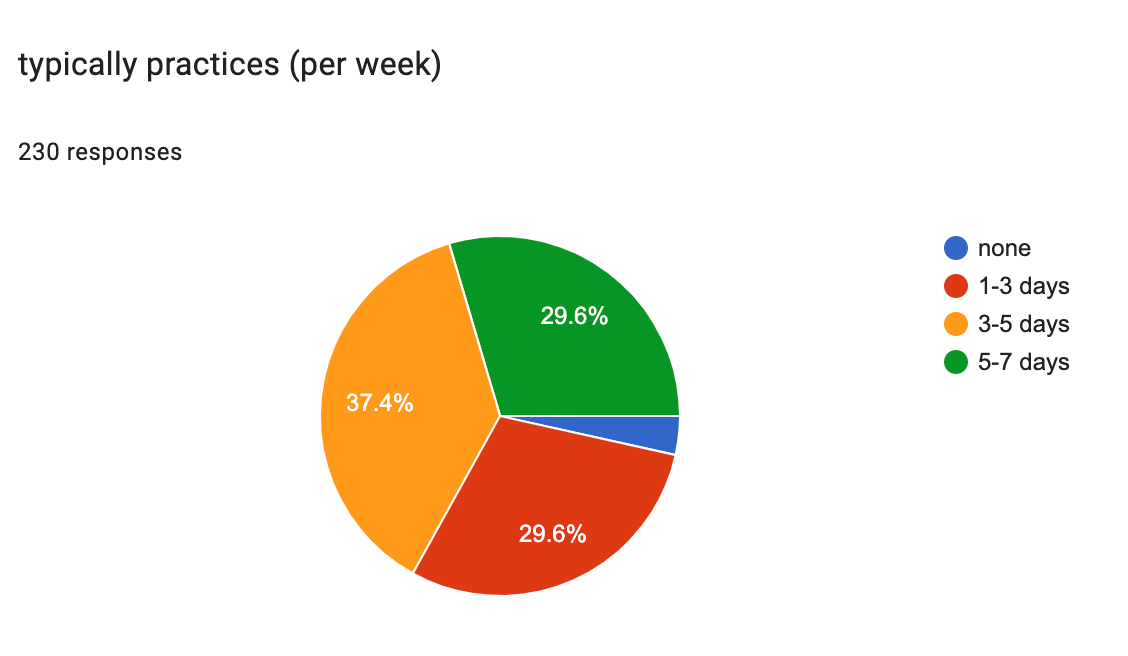 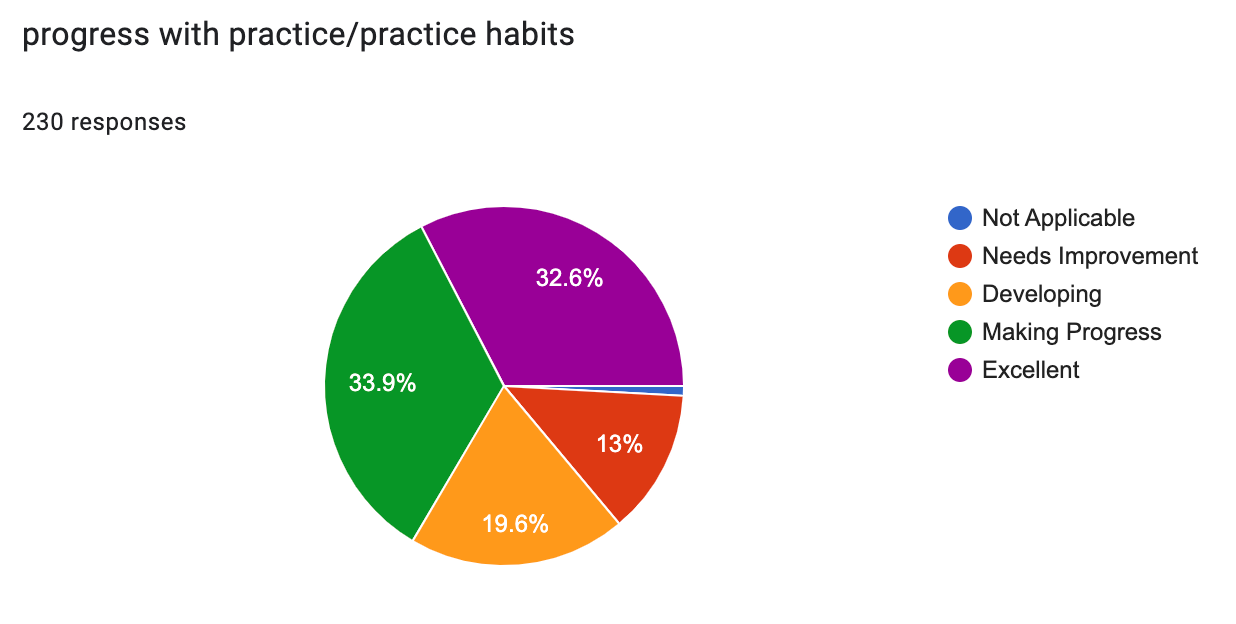 THOROUGHNESS & FOLLOWING DIRECTIONS How thorough is your student being while practicing? Are they following the directions of their teacher at home? Do they keep their binder out and look at the assignment sheet while practicing? It is our job to teach our students how to practice to make sure they are making progress, however we cannot be there during their practice time! You know that old saying that you can lead a horse to water, but you can't always make him drink.... 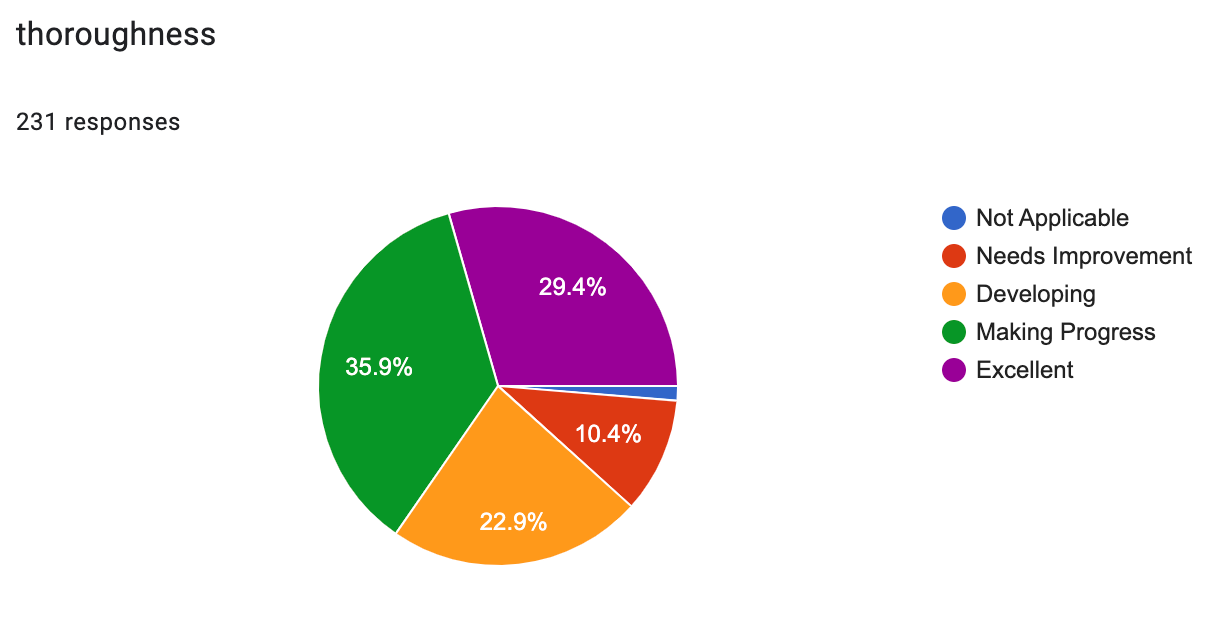 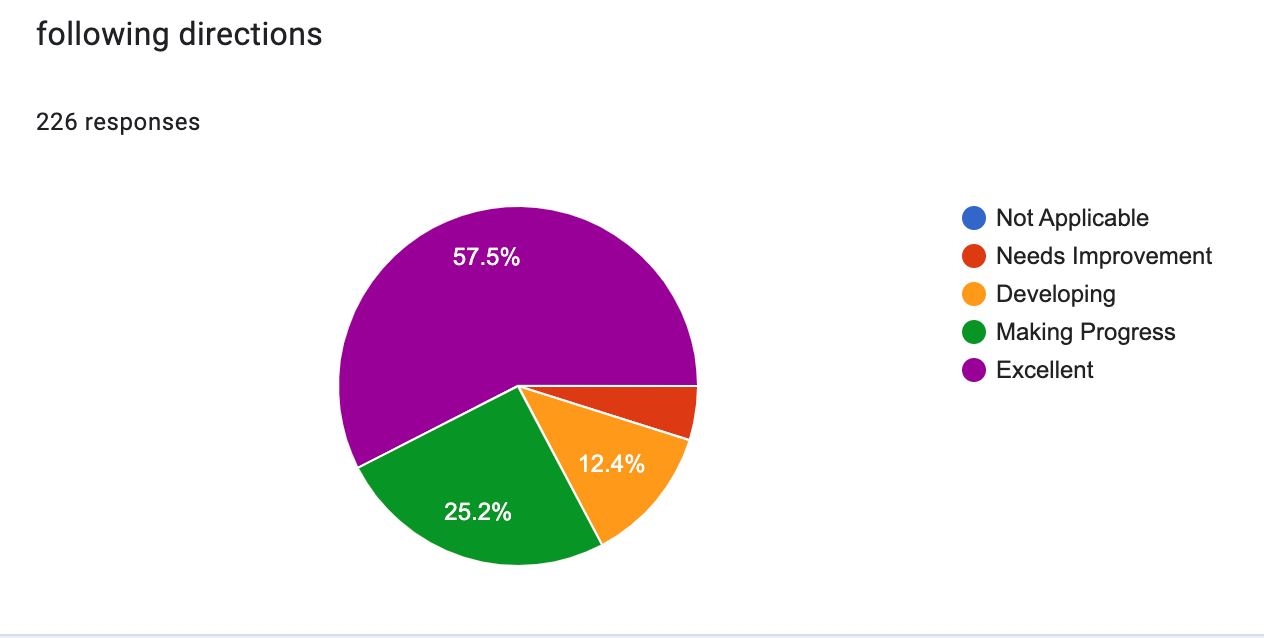 ATTITUDE This is a big one! And look at how our students scored- Excellent! This generally applies to attitude in the lessons. If your student scored low on this, we need to find out why. It could be various reasons- maybe they don't feel like lessons, maybe it's due to lack of practice or motivation or progress. Maybe it's not a good fit with teacher...it could be so many things! But, talking to your student is the first thing that should happen regardless of how they score. If they scored "Excellent", find out why and keep that going! 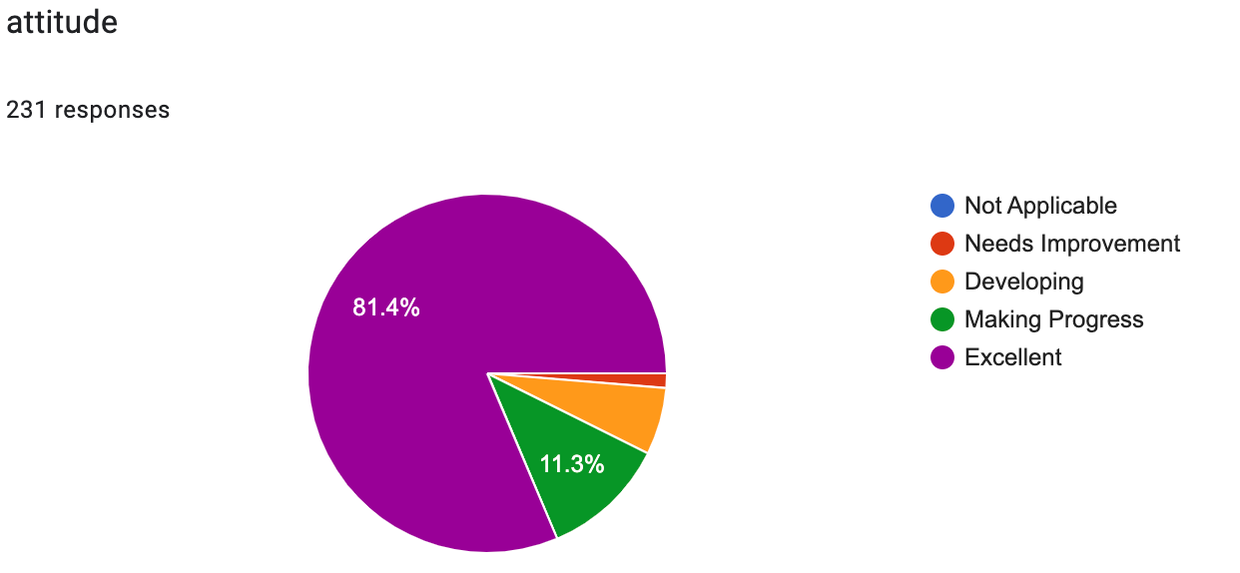 I hope this was helpful in looking at your student's evaluation. In the spring, we will be looking back at the entire school year. Obviously, we want scores to be even higher! That means progress was made!
But honestly, the most important thing is our communication with you, the parent, on how your student is doing. Many of us already have great conversations after lessons, however, it is my thought that it is written down and documented. Of course, if you have any questions on evaluations, please reach out to me. If I don't know the answers to your questions, I will definitely find them out!  This year, we are turning the bonus classes up a notch! I'm super excited with the line up we have for this year! These are free classes to our school-aged students enrolled in group and private lessons- so, please take advantage! The thought is to offer something different outside of our normal lesson experience- to open our eyes, and ears, to other musical experiences. Take a look: 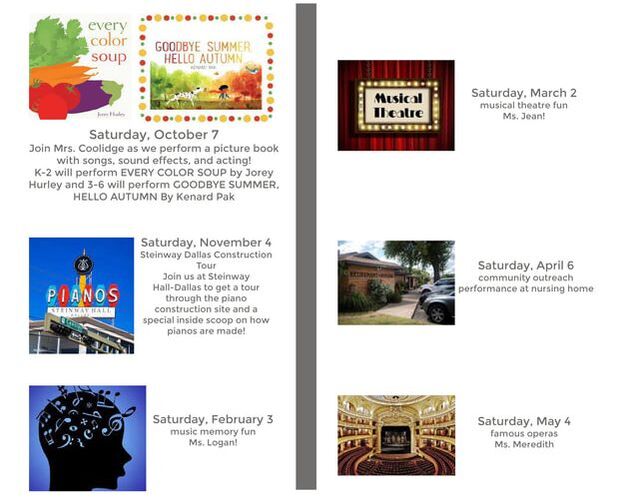 Sign up for these classes is mandatory- just head into your account by logging in here.
For how to navigate through your account, check out this video Don't wait! Participation is limited in most of the classes and there is limited availability! Have you heard all of the competitive buzz around the school about Music Ball? Yep, it's that time of the year!! I get super excited and pumped up about music ball- and this year is no different!! This year, each teacher picked different "food" team names and we are having a blast with it!! We even have a teacher combined team for the adult students who I'm secretly rooting for! How awesome would that be for the adult team to win?!?! At each student's lesson, we give points based on their theory work completed, practice days, and their attitude and posture in the lesson. Then, those points are added to a score sheet where the team gets an average. The team with the highest average for the week wins the game. We will compete for 7 weeks. At that point, the teams with the highest number of wins will be the winners. This year, we are giving prizes to our 1st, 2nd, and 3rd place teams in each division. In addition, each team will have a Top Team Player- the player who has the highest average. All Top Team Players and 1st place teams will be invited to a lock in at Music SO Simple where we will get to watch a movie, play music games, eat pizza, and just have fun! This date will be announced later! Check out the current stats here!   I have gotten a lot of questions regarding summer private lessons- most especially why they look like they are so much more expensive. So, I figure that I can use some blog time to write down exactly why it looks like it is more expensive, but it's really not as much as you think. Stick with me.
For the mere sake of time, I'm only going to compare 45-minute lessons for you. Of course, feel free to do the lesson package that applies to you and your family. During the school year, we include 32-lessons from September through May. We divide this number into 9 equal monthly payments, which means you are paying for about 3.5 lessons each month. We do this because some months have more weeks than others, students come on different days & there are not an equal number of days in each month...some months you get MORE lessons, some months you get LESS. Hopefully that makes sense. 45 minute lessons each month is $205. That is a total of $1845 for the school year or almost $58 per lesson. For the summer session- 6 lessons of the same length are $375, which is $62.50. We have gone up $4.50 per lesson. Of course, we know everything goes up- this is to help provide you with the best teachers and keep our pay rate competitive to what other schools pay their own teachers. This price will stay the same for the 2023-24 school year. We do a small increase each summer which is reflected in the following school year pricing. There are no discounts in the summer because everyone is traveling and we don't have the normal cash flow like the school year. I honestly do not like talking money or making pricing of lessons go up. I have a family of my own as well- and it's hard! However, I do know that the quality of what we provide is the best. Ask any of our teachers, and they love doing what they do- but they all love working at Music SO Simple. In addition to our wonderful teachers, we are building our library of music- which directly affects what we give our students, teaching on the best instruments, keeping them in tune and maintained, and offering a wonderful staff and facility for all. These are just a few things that you do see every single week. I promise to keep that going for you all. That's all I have to say. I'm certainly not going to keep anyone from taking lessons because of money, so if you are in a real bind, please feel free to reach out to me. -Stathia Orwig
I have been working HARD on recitals since December 21st- a few days after our huge December Holiday Recital 2022. Along with the photos from the day's recitals, I had also sent out a survey getting some much needed feedback. Here's what I learned from our recitals as they are now:
The most common mentioned feedback was about wanting a better venue where the student is elevated on a stage or the audience has more auditorium style seating. AND THIS IS WHAT I HAVE BEEN WORKING SO HARD ON! To be honest, this is something I have been worrying about. Because the space has a stage, but not a heavy enough stage to support the piano, we have to have the piano in front of the stage, which limits our seating right in front of the piano. The location of the church is ideal AND it's easy for our families to get in and out of. Parking is amazing, and being able to walk right in without taking elevators, or walking a far distance is key for us. The other wonderful thing about it is that there is ALWAYS someone to help us if we need something or if there is an emergency. This is not something we have had in the past at a different venue, even when our rental fees went up. Our plan for May is to offer TWO different recital dates since we will have many more participants. The first will be a recital in the parking lot: "Luau in the 'Lot" with 3 recitals. This will be more of a casual recital. Then later in May, we will offer another 5-6 recitals in the church hall moving the piano to one side (instead of in the middle of the hall) and place the seating with many rows back. I am working on a new/different venue for our formal recitals in December. I willl keep you all posted on this as I make decisions.  This week, I came across a great article that explains some different ways our brains react to music. Almost every part of our brain reacts when we make or listen to music! If you've ever been curious about the benefits of music study, you can see some specifics here. The web page includes a diagram of the brain, showing how music affects each specific area. One interesting highlight: since music engages the part of our brain that regulates coordination and rhythm, Parkinson's patients who need help getting around can be prescribed music as a treatment! Explore more for yourself here. - Emily McMullin Article: Your Brain on Music, published in Pegasus, the magazine of the University of Central Florida.
|
Archives
July 2024
Categories
All
|


 RSS Feed